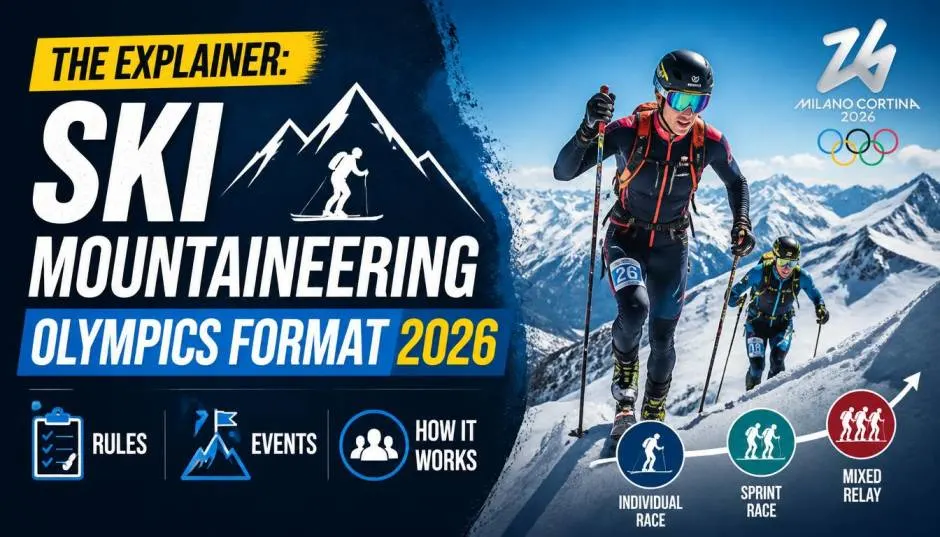
TheSki mountaineering Olympics format 2026made its debut on February 19 in Bormio, Italy. I watched the first heats live at 3:50 AM Eastern time. Honestly? I had no idea what I was looking at for the first ten minutes.
Athletes running uphill with skis on their backs. Then skiing down. Then peeling something off their skis. It looked chaotic. But once you understand the rules, this becomes one of the most exciting Olympic events.
TheSki mountaineering Olympic debutbrought three medal events: men's sprint, women's sprint, and mixed relay. Let me break down exactly how each race works, what equipment matters, and how to watch like a pro.
What Is Ski Mountaineering?
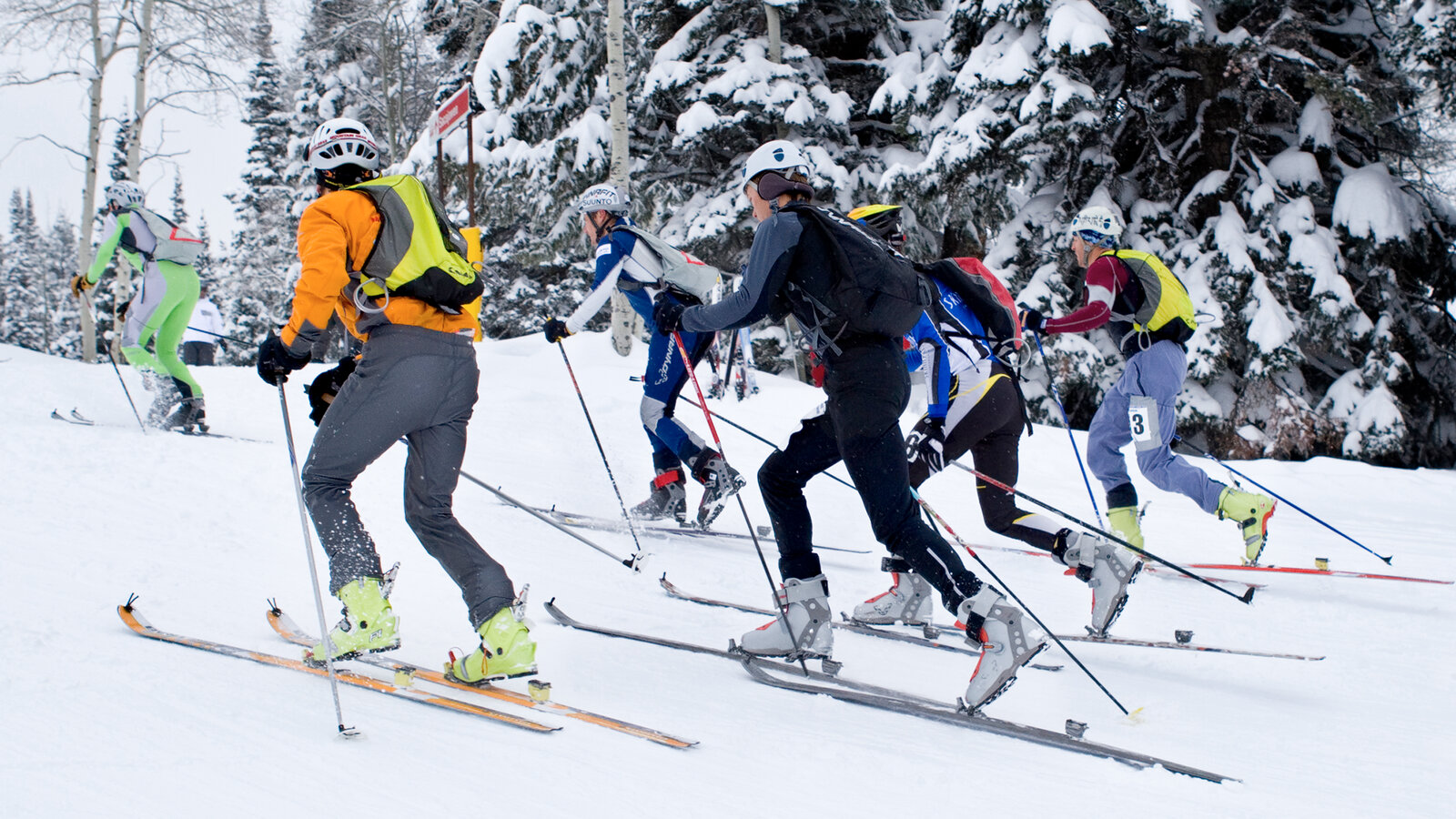
Ski mountaineering – or "Skimo" – is racing up and down a mountain. No chairlifts. No breaks.
Athletes start at the bottom. They climb uphill on skis. Then they take their skis off and run up a set of stairs cut into the snow. Then they put skis back on. Then they ski down to the finish.
Read Also:2026 Winter Olympics Women Single Skating Free Skating Amber
Sounds simple. It is not.
Each race lasts between 3 minutes (sprint) and 30 minutes (mixed relay). The athlete with the fastest total time wins. But here is the catch. You can be the fastest climber and still lose if you mess up the transitions.
I learned this watching the men's sprint final. The favorite fumbled removing his climbing skins. Lost five seconds. Finished fourth. That is Skimo in a nutshell. Every second matters.
The3Olympic Events (Side-by-Side)
TheSki mountaineering Olympics format 2026includes three medal events. Here is how they compare.
| Event | Duration | Elevation Gain | Course Length | Number of Athletes |
|---|---|---|---|---|
| Men's Sprint | ~3 minutes | 70 meters | 610 meters | 18 |
| Women's Sprint | ~3 minutes | 70 meters | 610 meters | 18 |
| Mixed Relay | ~30 minutes | 135 meters | 1,310 meters | 12-18 teams |
Sprint race (men and women):One lap. Three minutes of pure chaos. Six athletes start together. They climb, boot-pack, climb again, then ski down. The first to cross the finish line wins.
Mixed relay:Four laps. Woman starts. Then man. Then woman. Then man. They tag each other by touching hands or tapping backpacks. Total race time around 30 minutes.
The2026 Olympic downhill skiingfans might find this confusing. Downhill skiing is one person going fast in one direction. Skimo is multiple people going up and down. Different sport entirely.
Breaking Down the Sprint Race (Step by Step)
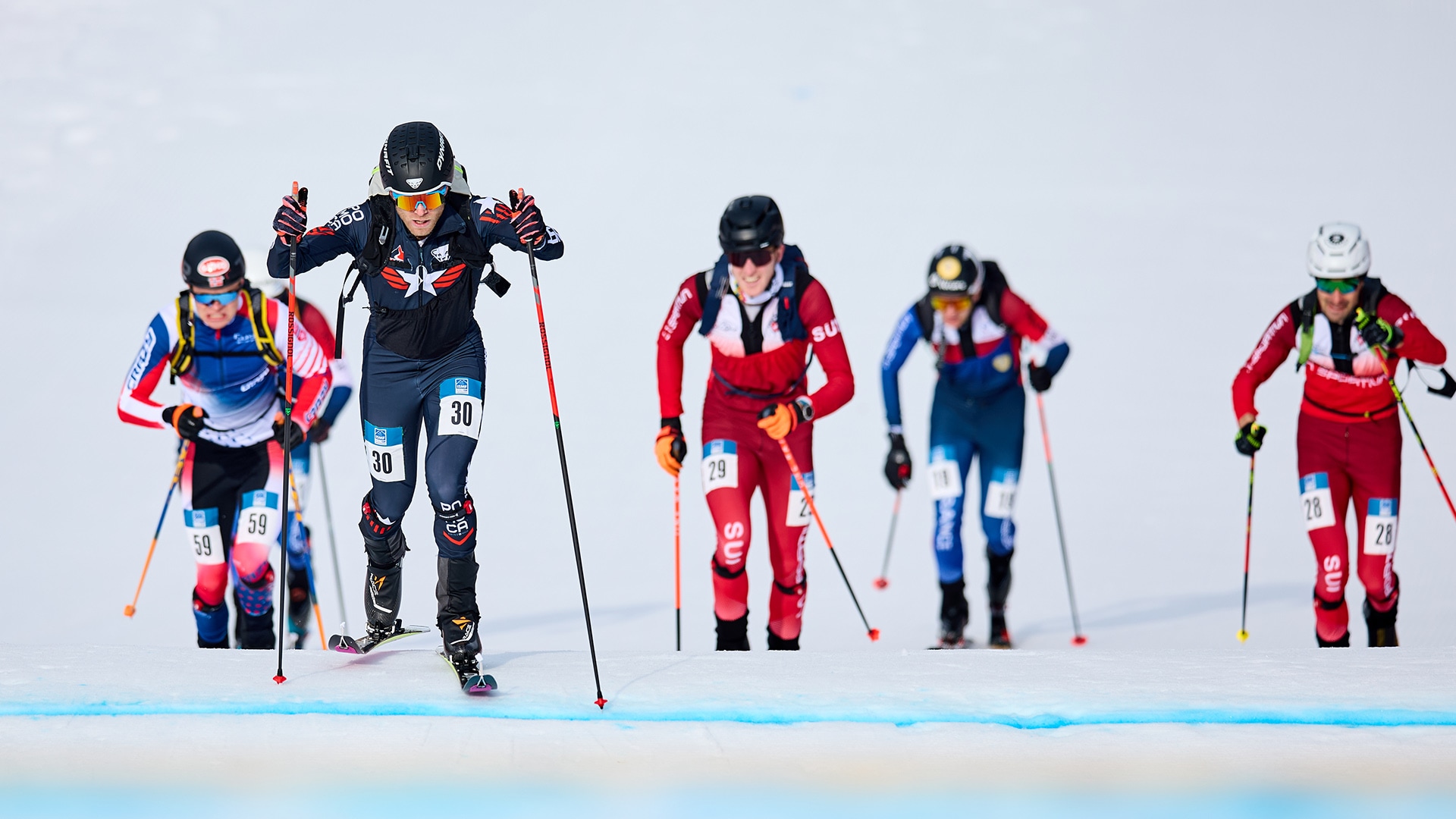
I watched the sprint heats on February 19. Here is exactly what happens.
Step 1: The Start
Six athletes line up. They wear ultra-light skis. Around 800-900 grams each. Compare that to downhill skis at 2,000+ grams. Everything is minimal.
The starting gun fires. They ski uphill immediately.
Step 2: Climbing with Skins
Underneath their skis are "skins." These are carpet-like strips of synthetic material. They grip the snow so the athlete does not slide backward.
Think of it like a one-way ratchet. You can go up. You cannot go down.
Athletes climb about 70 vertical meters. That is roughly a 20-story building.
Step 3: Boot-Packing (The Running Section)
Reach a set of stairs cut into the slope. Athletes click out of their skis. Stow them on their backpacks. Then run up the stairs on foot.Why? Because the slope is too steep for skins to grip.
You Must Also Like:Controversial Judgment Decisions in Olympic Boxing Qualifiers
Here is where races get lost. Transitioning from skis to boots takes practice. The best athletes do it in under 10 seconds. I timed one athlete in the semifinals. He took 18 seconds. Lost the race right there.
Step 4: Second Climb
Put skis back on. Climb the final section to the summit. Then remove the skins. Athletes peel them off the skis like stickers. Stuff them into a pouch on their racing suit.
Step 5: The Downhill
Lock the ski heels (they were free during climbing). Then ski down a giant slalom course. Gates. Turns. Full speed.
First one across the finish line wins.
Sprint Qualification Format
The sprint has three rounds:
-
Heats:18 athletes split into 3 heats of 6. Top 3 from each heat advance. Plus the 3 fastest non-qualifiers ("Lucky Losers"). That makes 12 athletes.
-
Semifinals:12 athletes split into 2 heats of 6. Top 2 from each heat advance. Plus the 2 fastest non-qualifiers. That makes 6 athletes.
-
Final:One race. Six athletes. Winner takes gold.
I watched the women's sprint final. Switzerland's Marianne Fatton won the first-ever Olympic gold in Skimo. Her transitions were flawless. She beat France's Emily Harrop (silver) and Spain's Ana Alonso Rodriguez (bronze – racing on a torn ACL).
Yes. A torn ACL. And she still won bronze. That tells you everything about these athletes.
Breaking Down the Mixed Relay
The mixed relay happens on February 21, 2026. Here is the format.
Teams:One man + one woman from the same country. Maximum 18 teams.
Race order:Woman → Man → Woman → Man. Four laps total.
Course:Two climbs and two descents per lap. Boot-packing section appears on the second climb of each lap.
Batoning:Athletes tag each other in a dedicated handover area. A touch on the hand or a pat on the backpack.
Total time determines the winner.Not who crosses first on any individual lap.
The United States team qualified. Cam Smith (13-time US national champion) and Anna Gibson (former mountain runner who switched to Skimo less than a year ago). They won a World Cup mixed relay by over a minute. Keep an eye on them.
What You Actually Need to Know?
You do not need to become a gear expert to enjoy Skimo. But understanding the equipment helps you see why races are won or lost.
Skis
Short. Light. Around 160-170 cm. Compare to downhill skis at 180-190 cm. The short length makes them easier to carry during boot-packing sections.
Bindings
Two modes. Climbing mode: heel free, like cross-country skiing. Downhill mode: heel locked, like alpine skiing. Athletes switch between modes during transitions.
Skins
Sticky strips on the ski base. Grip going up. Slide going down when removed. Athletes remove them at the summit. Stuff them into a skin pouch attached to their thigh or lower back.
Boots
Lightweight. Two modes: walk mode (flexible ankle) and ski mode (stiff). Athletes switch modes during boot-packing transitions.
Backpack
Tiny. Holds skis during boot-packing. Also holds skins, water, and emergency gear.
Why this matters for viewers:Watch the transitions. That is where the race is won. Not the climbing. Not the downhill. The 10 seconds between sections.
How to Watch Skimo Like a Pro (Practical Advice)?
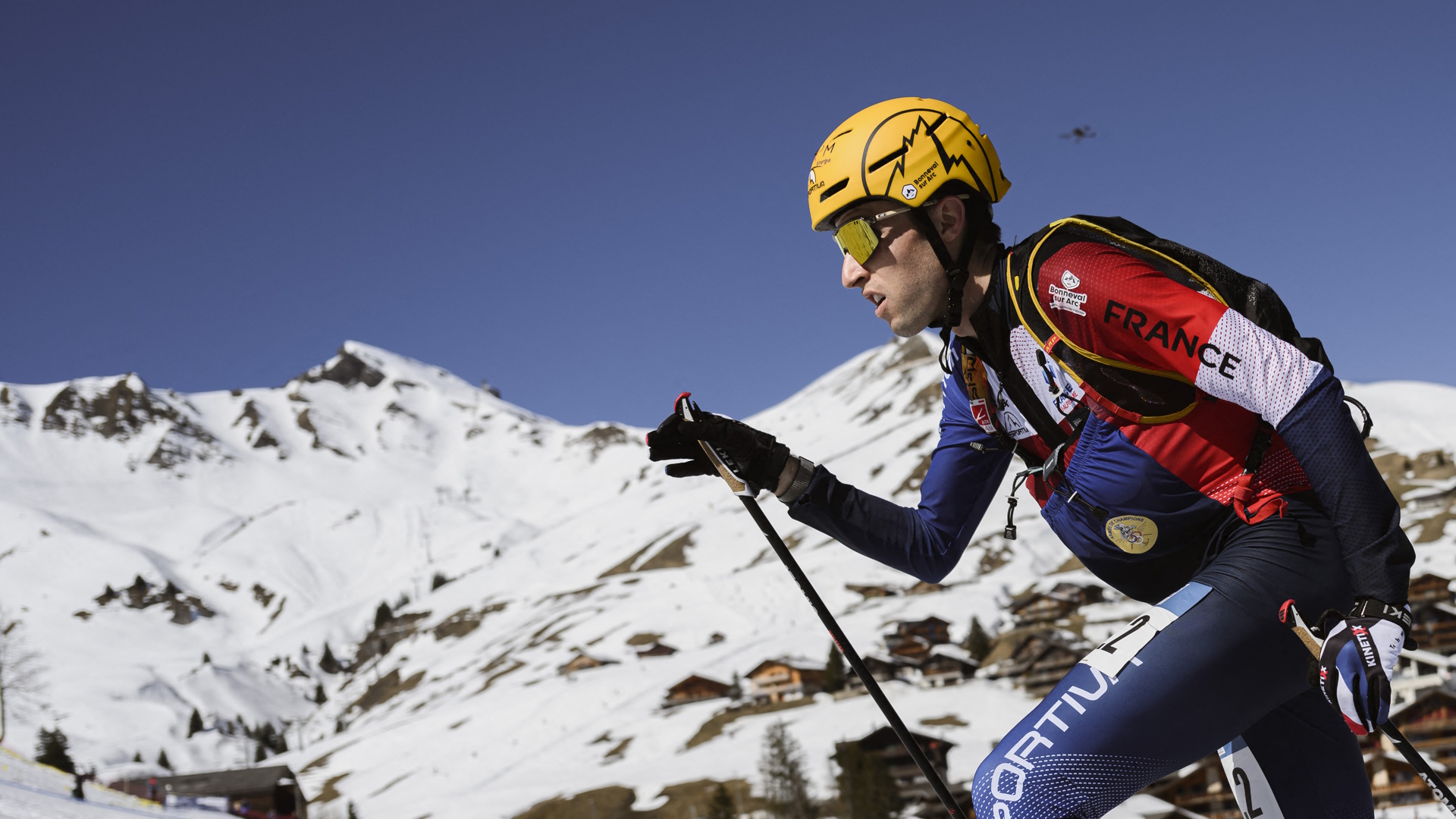
What to Look For?
The start:Watch who gets the hole shot. First to the initial climb often wins. But not always.
The first transition (skis to boot-pack):Count seconds. Under 10 seconds is world-class. Over 15 seconds means trouble.
The second transition (boot-pack to skis):Same thing. Speed matters.
The skin removal:Athletes peel skins off while moving. Some do it in 3 seconds. Others take 8 seconds. Watch their hands.
The downhill:Look for tight lines. Aggressive turns. The best skiers gain time here.
What to Ignore?
The announcers will talk about "vertical meters" and "elevation profiles." Ignore that for your first viewing. Focus on the transitions. That is where the race happens.
Best Events for New Viewers
Start with the sprint finals. Three minutes. Low time commitment. Easy to rewatch.
Then watch the mixed relay if you want the full experience. 30 minutes gives you time to understand the rhythm. You will see athletes fade. Others surge. The baton handovers add team dynamics.
Who Should Watch Skimo (Honest Take)?
Yes, watch if you like:
-
Short, intense races
-
Technical sports with equipment strategy
-
Underdog stories (Spain winning its first winter gold in 54 years)
-
Athletes who do insane physical things
Skip if you prefer:
-
Long, tactical races like cross-country
-
Pure speed events like downhill
-
Sports where equipment does not matter
Best for:Fans of track cycling, short-track speed skating, or obstacle course racing. Same energy. Same chaos.
Limitations and Honest Criticism
Skimo is not perfect. Here is what I noticed.
The production quality was rough.The first heat had camera angles that missed the boot-pack section completely. You saw athletes enter the stairs. Then you saw them exit. The middle part? Cut away to a wide shot of the mountain.
The announcers over-explained.Every transition got the same script. "And now he removes his skins..." Yes. We know. You said that 12 times.
The sprint is almost too short.Three minutes goes fast. Blink and you miss the entire race.
The mixed relay might be too long for casual fans.30 minutes of climbing and descending gets repetitive.
Who this is NOT for:People who want clear, predictable outcomes. Skimo is chaotic. The best athlete does not always win. One mistake and the medal goes to someone else.
Final Verdict: Should You Watch Ski Mountaineering?
Yes. But with realistic expectations.
TheSki mountaineering Olympics format 2026delivers exactly what the IOC promised. Fast races. Clear winners. Drama in every transition.But it is a new sport. The production has kinks. The announcers are learning.
The athletes are figuring out Olympic pressure.Watch the sprint finals first. Three minutes. No commitment. If you like the chaos, watch the mixed relay replay.
If you want my honest recommendation: start with the women's sprint final on replay. Marianne Fatton's performance was flawless. Watch her transitions. Then watch the men's final. Oriol Cardona Coll ended Spain's 54-year winter gold drought. That story alone is worth your time.
And remember this rule. In Skimo, the race is not won on the climb. It is won in the 10 seconds between sections. Watch the hands. Watch the skis. Watch who stays calm.
That is the real Olympic sport.